Column · @arthurnsun263
Best Basement Waterproofing NJ Methods for Older Homes
Older homes in New Jersey have a certain pull. Thick masonry walls, original trim, solid framing, and a sense of permanence that newer construction often struggles to match. They also come with quirks that do not show up in listing photos. One of the most common is a wet basement.
If you have spent any time in prewar or mid-century homes across North Jersey, Central Jersey, or along older shore communities, you have probably seen the same pattern. The basement smells musty after a hard rain. Efflorescence creeps across the foundation walls. A previous owner painted the masonry in hopes of hiding moisture, and now the paint bubbles and flakes. Sometimes the problem is dramatic, with actual seepage along the floor joint. More often, it is subtle, a mix of damp air, staining, and periodic water intrusion that becomes expensive because it is ignored for too long.
Basement Waterproofing NJ projects for older homes need a different level of judgment than similar work in newer construction. The right fix depends on how the house was built, how water moves on the site, and how the basement is actually used. There is no single product or system that solves every problem. In older homes especially, the best results come from matching the method to the cause, not from applying a one-size-fits-all package.
Why older New Jersey homes get wet basements
New Jersey gives basements a hard time. The state sees heavy seasonal rain, freeze-thaw cycles, humid summers, occasional tropical storm impacts, and in some areas a relatively high water table. Add clay-heavy soils in many regions, and water tends to linger near foundations rather than draining away quickly.
Now layer in the age of the housing stock. Many older homes were built before modern waterproofing membranes, footing drains, vapor barriers, and robust exterior drainage details became standard. A basement from the 1920s or 1940s may have stone or block walls, a thin slab, and no meaningful exterior dampproofing left intact. Mortar joints age. Settlement opens pathways. Window wells deteriorate. Soil around the foundation gets regraded over decades by landscaping and walkways, often in the wrong direction.
I have seen basements where the owner swore the wall was failing, only to find that a single downspout had been dumping water next to the corner of the house for years. I have also seen homeowners spend money on interior drain tile when the bigger issue was hydrostatic pressure under an old cracked slab combined with a seasonal rise in groundwater. Both jobs involved water in the basement, but the correct remedies were not the same.
That distinction matters. Waterproofing is not really about the basement alone. It is about managing water before it builds pressure, finds a weak point, or turns the below-grade space into a dehumidification battle all summer long.
Start with diagnosis, not products
A good assessment of an older basement usually starts outside. That may sound counterintuitive to homeowners focused on a wet wall or puddle indoors, but the path water takes almost always begins at the roofline, grade, or surrounding soil.
Roof runoff is the first thing I check. Gutters that overflow, downspouts that discharge too close to the home, and underground drain lines that are clogged or broken create a surprising share of basement moisture problems. After that comes grading. Even a slight negative slope toward the house can send thousands of gallons over time toward the foundation. Patios, old asphalt driveways, settled walkways, and flower beds built up against the wall can all trap water where it should never sit.
Inside, the clues tell a story if you know how to read them. White chalky deposits usually point to moisture moving through masonry. Staining limited to the lower portion of a wall often suggests seepage at the cove joint or water pressure at footing level. Rust at the bottom of steel columns, dampness around utility penetrations, rotted sill plates, and mold on stored cardboard all indicate different moisture patterns. Condensation can also mimic leakage, especially in summer when warm humid air hits cool foundation surfaces or uninsulated pipes.
Older homes complicate diagnosis because they often have more than one issue at once. A basement can have bulk water entry during storms, chronic vapor migration through the slab, and poor ventilation that worsens the musty smell. Treating just one of those leaves the owner frustrated because the basement improves, but never feels truly dry.
Exterior drainage correction is often the highest-value first step
Homeowners sometimes expect waterproofing to mean opening walls or installing drains right away. In many older homes, the best first dollars are spent on controlling roof and surface water. This is less dramatic than a full system installation, but it often makes the biggest difference for the least disruption.
Extending downspouts well away from the foundation can have immediate impact. So can correcting clogged gutters, repairing crushed leaders, or redirecting splash blocks that have been nudged out of place. Regrading soil around the perimeter, when done carefully, can reduce pressure on the foundation during every storm. The key word is carefully, because piling soil against wood siding or covering up weep paths can create new problems.
For older homes with settled front walks or side paths sloping toward the house, lifting or replacing hardscape can stop recurring seepage. I have seen a single settled bluestone stoop act like a funnel, driving water toward a basement wall every time it rained. The owner had already painted the interior twice and run a dehumidifier nonstop. Reworking the exterior drainage changed the basement more than anything done inside.
Exterior corrections do have limits. If the house sits low on the lot, if neighboring properties drain toward it, or if groundwater rises from below, exterior grading alone will not solve the problem. Still, skipping these basics and moving straight to interior systems usually leaves performance on the table.
Exterior waterproofing membranes, when they are worth the excavation
For some older homes, especially those with persistent wall seepage or deteriorated masonry below grade, exterior excavation and waterproofing is the most complete remedy. It is also the most invasive and often the most expensive.
This method typically involves excavating down to the footing, cleaning the foundation wall, repairing cracks or mortar joints, applying a waterproof membrane, and installing drainage board or protective layers before backfilling. In many cases, a new footing drain is added or replaced at the same time, tied to proper discharge.
When it works well, it works very well because it stops water before it enters the wall. That matters in older stone or block foundations that absorb and transmit moisture. Keeping the wall itself drier can reduce long-term deterioration and improve basement air quality. It is also useful when interior finishes are planned and the owner wants the most robust envelope possible.
But excavation is not automatically the right answer for every old house. Access can be difficult in tight urban lots. Mature trees, porches, decks, utilities, and historic hardscape increase complexity fast. There is also the issue of the wall itself. Some older rubble stone or soft masonry foundations require a contractor with real restoration experience, not just waterproofing sales experience. Aggressive excavation around fragile walls can do harm if the work is poorly sequenced.
For that reason, I usually think of exterior waterproofing as the best method when there is a clear wall-entry problem, practical access, and a budget that supports doing the whole assembly correctly. Partial excavation can help in targeted areas, but piecemeal work needs careful planning or water simply finds the next weak point.
Interior perimeter drainage remains one of the most reliable solutions
For many older basements in New Jersey, interior perimeter drainage with a sump system is the method that offers the best balance of reliability, cost, and practicality. It does not stop water from reaching the outside of the foundation, but it controls what happens once that water gets to the basement envelope.
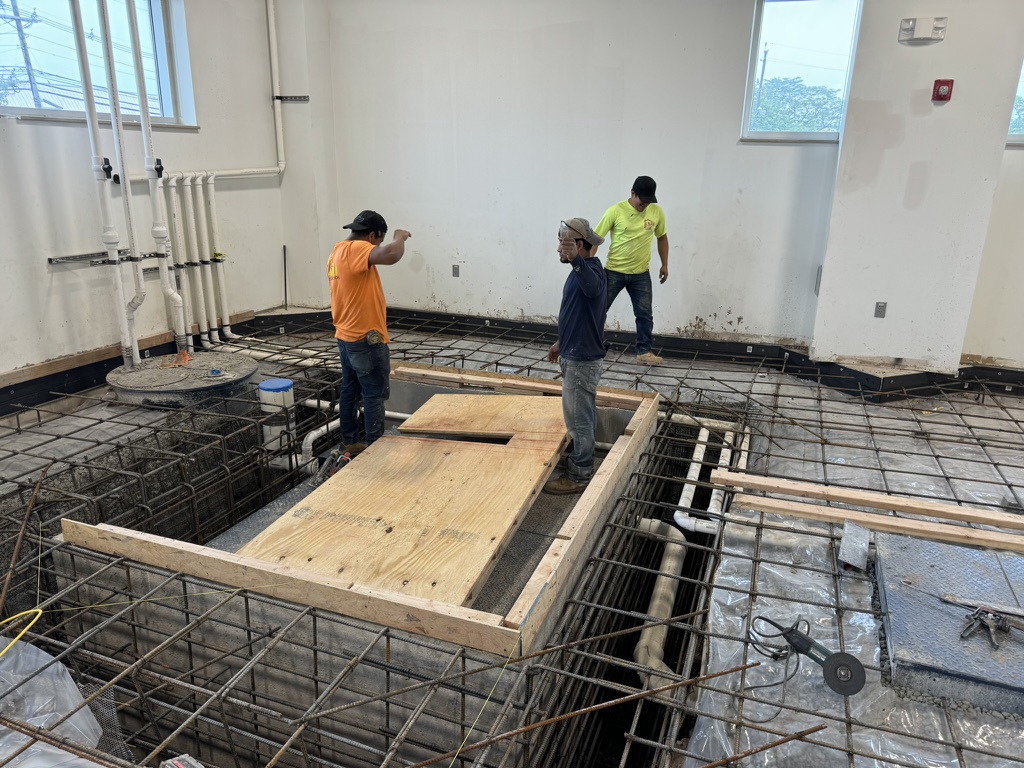
This system usually involves opening the slab around the inside perimeter, installing drain channel or perforated pipe alongside the footing, and directing collected water to a sump pit where it is pumped away from the house. If seepage occurs at the wall-floor joint, this approach is especially effective because it relieves pressure at the point where water commonly appears.
Some homeowners hesitate because they worry that interior drainage sounds like “letting water in.” Technically, water may still reach the exterior side of the wall or beneath the slab. The point is to intercept it before it reaches the usable basement space. In older homes where full exterior excavation is impractical, this is often the smartest solution. It also avoids disturbing landscaping, porches, and adjacent structures.
The quality of installation matters a great deal. A proper sump should have an airtight lid where appropriate, a reliable pump sized for the expected flow, and a discharge line routed far enough from the foundation to prevent short cycling of water back toward the house. In New Jersey, I strongly favor a battery backup or water-powered backup where feasible, because the storms that create peak water conditions are also the storms most likely to knock out power.
Interior systems are not a cure for every issue. They do not fix deteriorated exterior masonry. They do not stop humid air from condensing on cool surfaces. And they need maintenance. Sump pumps fail, check valves wear out, and discharge lines can freeze if poorly designed. But for active seepage in older basements, they are often the workhorse solution that keeps the space dry year after year.
Crack injection has a place, but it is not a whole strategy
Crack repair gets a lot of attention, and sometimes for good reason. A poured concrete foundation with a clean vertical crack that leaks during rain events can often be repaired effectively with polyurethane or epoxy injection, depending on the structural and moisture context. If the crack is the clear entry point, this can be a very efficient fix.
Older homes, however, are frequently built with stone, brick, or concrete block foundations rather than modern poured walls. In those cases, “crack repair” is less straightforward. Water may move through mortar joints, porous masonry units, or multiple tiny pathways that are impossible to isolate with a simple injection.
That is why I caution homeowners against seeing crack injection as a universal answer. It is excellent when the problem is truly discrete and the wall type supports it. It is much less useful when the basement has broad hydrostatic pressure or widespread masonry moisture. Used in the wrong scenario, it becomes a temporary patch that buys a season or two but does not change the underlying water load.
Masonry repair and repointing for old stone and block foundations
One of the most overlooked parts of Basement Waterproofing NJ work on older houses is plain old masonry repair. A lot of basements from the early 20th century have foundations that are not failing structurally, but they are tired. Mortar is soft or missing. Parge coats have detached. Previous repairs used hard cement in the wrong places. Water exploits all of that.
Repointing mortar joints with compatible materials can improve resistance to water movement and extend the life of the wall. Compatibility matters. On historic stone foundations, the wrong mortar can trap moisture or damage softer masonry units. This is where general waterproofing knowledge needs to overlap with preservation knowledge. The cheapest contractor is often the one most likely to smear modern material over an old wall and call it fixed.
I remember a basement in an older Essex County home where the owner had repeated flaking and damp patches despite an interior drain. The drain was doing its job, but the wall itself was still absorbing water and shedding surface material because of failing mortar and a dense, non-breathable coating from a previous renovation. Removing the incompatible coating, repointing key areas, and improving dehumidification made the space noticeably healthier. Not bone dry at the wall face in every season, but far more stable and usable.
That outcome points to a truth many homeowners do not hear clearly enough. In older basements, success does not always mean the walls look like a finished first floor. Sometimes success https://wakelet.com/@ardwaterproof means controlling liquid water, allowing masonry to breathe appropriately, and keeping relative humidity in a manageable range.
Dehumidification and vapor control matter more than people expect
Not every damp basement is leaking in the way homeowners imagine. In many New Jersey summers, basement humidity climbs because outdoor air is warm and moisture-laden. When that air enters a cool basement, it condenses on pipes, ducts, and even walls. The result feels like seepage, smells like a moisture problem, and can still support mold growth, even if rainwater intrusion is minimal.
This is why dehumidification belongs in the conversation from the beginning. A good dedicated dehumidifier, preferably one that drains automatically, can make a basement feel entirely different. In a space that is only occasionally wet but consistently humid, dehumidification may be as important as any structural waterproofing measure.
Vapor movement through old slabs is another common issue. Many older basements have no vapor barrier beneath the concrete. Moisture can migrate upward, making floors feel damp and ruining certain finishes. If the basement is going to be finished, flooring choices need to account for this reality. Floating systems with built-in moisture tolerance usually perform better than materials that assume a perfectly dry slab.
Waterproof paint and sealers have a limited role here. They can sometimes improve appearance or reduce minor vapor transmission, but they are not reliable answers to active water pressure. In fact, on older masonry they often blister or peel because they trap moisture trying to escape. I am not against coatings entirely, but I treat them as secondary measures, not core waterproofing.
Warning signs that call for a more serious solution
Some basement symptoms justify prompt professional evaluation because they suggest a larger moisture load or emerging structural concern.
- Water entering at the wall-floor joint after storms
- A sump pump running frequently even in moderate weather
- Horizontal cracking, bowing, or displaced masonry
- Persistent mold odor despite cleaning and dehumidification
- Efflorescence and paint failure returning soon after cosmetic repairs
These signs do not always mean the repair will be major, but they do mean the problem is established enough that guessing rarely works.
Finishing an older basement without creating a future problem
A dry enough basement for storage is not automatically dry enough to finish. This is where older homes get many owners into trouble. They solve visible water entry, frame walls, install insulation and flooring, and then discover musty odors or hidden mold a year later.
Finishing below grade in an older home requires a conservative mindset. Materials should tolerate some seasonal variability. Wall assemblies need to manage moisture rather than trap it. Mechanical access should remain practical. If the basement has a history of seepage, a fully closed wall built tight to an old masonry surface is often asking for trouble.
I generally prefer systems that create a capillary break from the foundation wall, avoid paper-faced materials where possible, and leave room for inspection and maintenance. Flooring should also suit the moisture profile of the space. Luxury vinyl over an appropriate sublayer tends to handle minor moisture better than hardwood or low-quality laminate. Area rugs can still become moisture indicators, which is useful, because they show you quickly if conditions change.
There is also a lifestyle point that matters. If the basement will house expensive finishes, electronics, or sleeping areas, your tolerance for risk should be lower. That may justify more extensive waterproofing upfront than if the space will remain a workshop, gym, or storage area.
Cost, trade-offs, and what “best” really means
Homeowners often ask for the best method as if there is a single gold standard. In practice, “best” means best fit.
If the primary problem is roof runoff and poor grade, then the best solution may be relatively modest exterior correction. If the basement takes on water at the cove joint during storms and exterior excavation is unrealistic, then interior perimeter drainage with a dependable sump may be the best answer. If a stone foundation is deteriorated and accessible from outside, then masonry restoration plus exterior waterproofing may offer the strongest long-term result.
Budgets matter, but so does the intended use of the basement. A homeowner protecting a furnace, water heater, and stored belongings may reasonably choose a different level of intervention than someone planning a high-end finished family room. Neither decision is wrong if it is informed.
The mistake is paying for work that sounds comprehensive but does not match the actual moisture path. I have seen expensive systems underperform because no one addressed the downspouts. I have also seen low-cost fixes hold up beautifully because the diagnosis was accurate and the execution was clean.
Questions worth asking any waterproofing contractor
Before hiring anyone for Basement Waterproofing NJ work on an older home, it helps to ask a few pointed Basement Waterproofing NJ questions.
- What do you believe is the main source of the water, and how did you verify that?
- Are you proposing to manage water outside, inside, or both, and why?
- How will this approach work with an older stone, block, or mixed-material foundation?
- What maintenance will the system require over time?
- If the basement is later finished, what limitations should I keep in mind?
Strong contractors usually welcome these questions. Weak ones tend to pivot back to generic promises.
What tends to work best in real older homes
After enough time around older New Jersey basements, a pattern emerges. The most durable outcomes usually come from layered solutions. First, reduce the amount of water getting to the foundation through roof drainage and grading. Second, repair the foundation where age and deterioration have created obvious pathways. Third, install an interior or exterior water management system that matches the site conditions and the construction type. Finally, control humidity so the basement feels as dry as it actually is.
That layered approach is not flashy, but it reflects how water behaves in the real world. It also respects the reality of older homes. These houses were built differently, have aged differently, and need methods that account for their materials and their history.
A dry basement in an older home is rarely the result of one miracle product. It is usually the result of good observation, honest diagnosis, and a willingness to solve the boring parts of the problem first. In my experience, that is what separates a temporary improvement from a basement that stays usable through the next heavy spring rain, the next August humidity wave, and the next decade of ownership.
ARD Waterproofing
Address: 98 Smull Ave, West Caldwell, NJ 07006
Phone number: +12016465936
FAQ About Basement Waterproofing NJ
What is the best waterproofing method for a basement?
The best overall approach to waterproofing a basement is a combined exterior and interior system that stops water at the foundation wall and safely manages any moisture that gets through.
What is the average cost to waterproof a basement?
The average cost to waterproof a basement ranges from $2,500 to $15,000, with most homeowners paying around $5,200 for a complete project.
Can a basement be waterproofed from the inside?
Yes, a basement can be waterproofed from the inside, and it is often the most affordable and least disruptive method.